
Salesforce Sales Cloud Reviews
Enterprise sales and service teams get an integrated CRM where autonomous AI agents handle routine workflows alongside human reps.
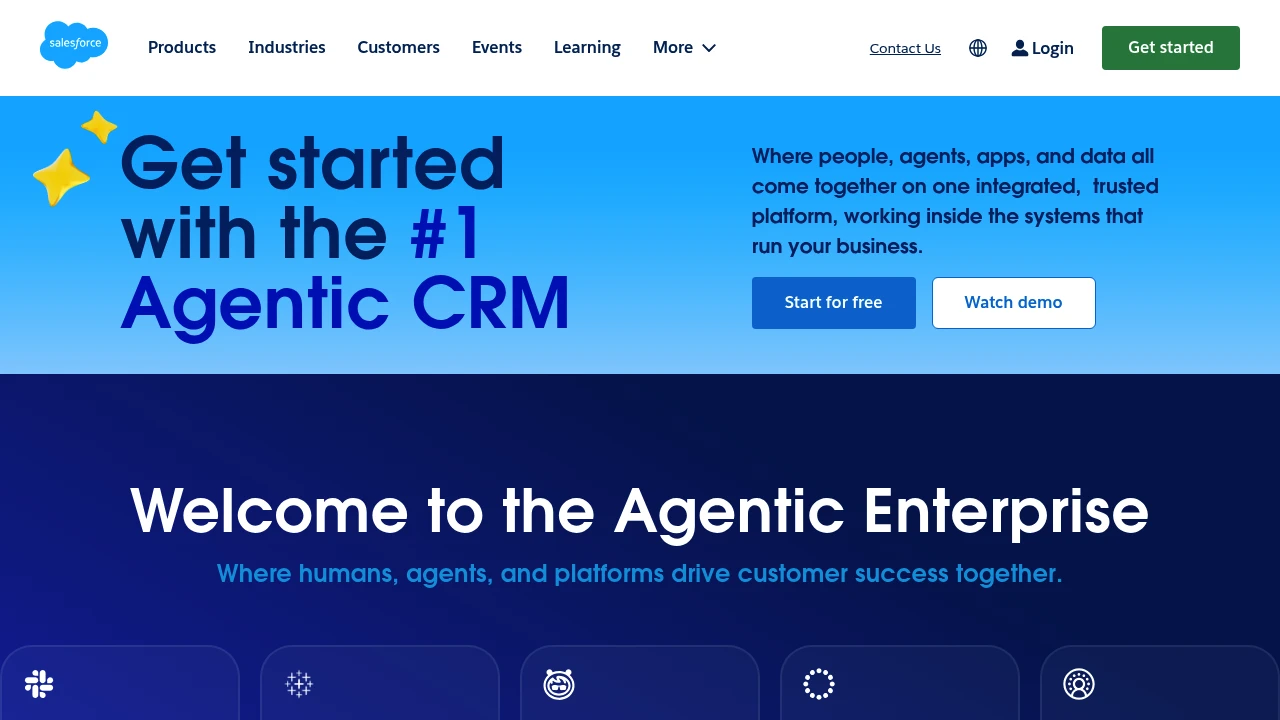
This system does not try to be a lightweight contact tracker or an isolated AI copilot that only drafts emails. Instead, it connects enterprise customer records, organizational rules, and autonomous software agents into one shared environment.
Before deploying this type of setup, customer information usually sits scattered across separate databases, ticketing tools, and spreadsheets. Reps waste hours copying notes between systems, and service agents field repetitive queries without clear account history. Adding disconnected generative bots often adds friction, since external assistants lack visibility into underlying pipeline stages or company logic.
Adopting Salesforce grounds those processes in a unified data model. The platform links customer context through Customer 360 and Data 360, allowing autonomous Agentforce agents to answer inquiries, qualify leads, and trigger multi-step workflows on their own. Teams collaborate alongside these agents directly inside Slack and analyze pipeline trends through Tableau. It fits large, multi-department organizations with intricate workflows, not small teams looking for a basic contact address book.
Salesforce Sales Cloud Key Features
- Data 360Connects systems, manages data, and unifies customer context into trusted business context for humans and AI agents.
- Customer 360Grounds agents with proven business logic, workflows, and processes to ensure trusted actions.
- AgentforceDeploys an infinitely scalable AI workforce that reasons, acts, and executes 24/7 across business processes.
- TableauTransforms business data into actionable analytics and insights that drive decisions for both humans and AI agents.
- SlackBrings people and AI agents together in a single workspace to collaborate, share context, and make decisions.
- Industry-Specific Agentforce SolutionsOffers 16+ out-of-the-box solutions tailored to workflows and data across various industries.
Write a verified review of Salesforce Sales Cloud and we'll send you a $50 Amazon gift card once it's published.
Write a reviewOne gift card per person, for a verified review that meets our quality bar. Full terms.


